ADVERTISEMENT
“Should Every State Ban Sharia?” — What the Five-State Movement Really Did
Not rules imported from countries that stone women, execute gay people, and treat non-believers as second-class citizens.
Five states have already drawn the line — passing laws that make clear: foreign law and religious law have no authority in American courts.
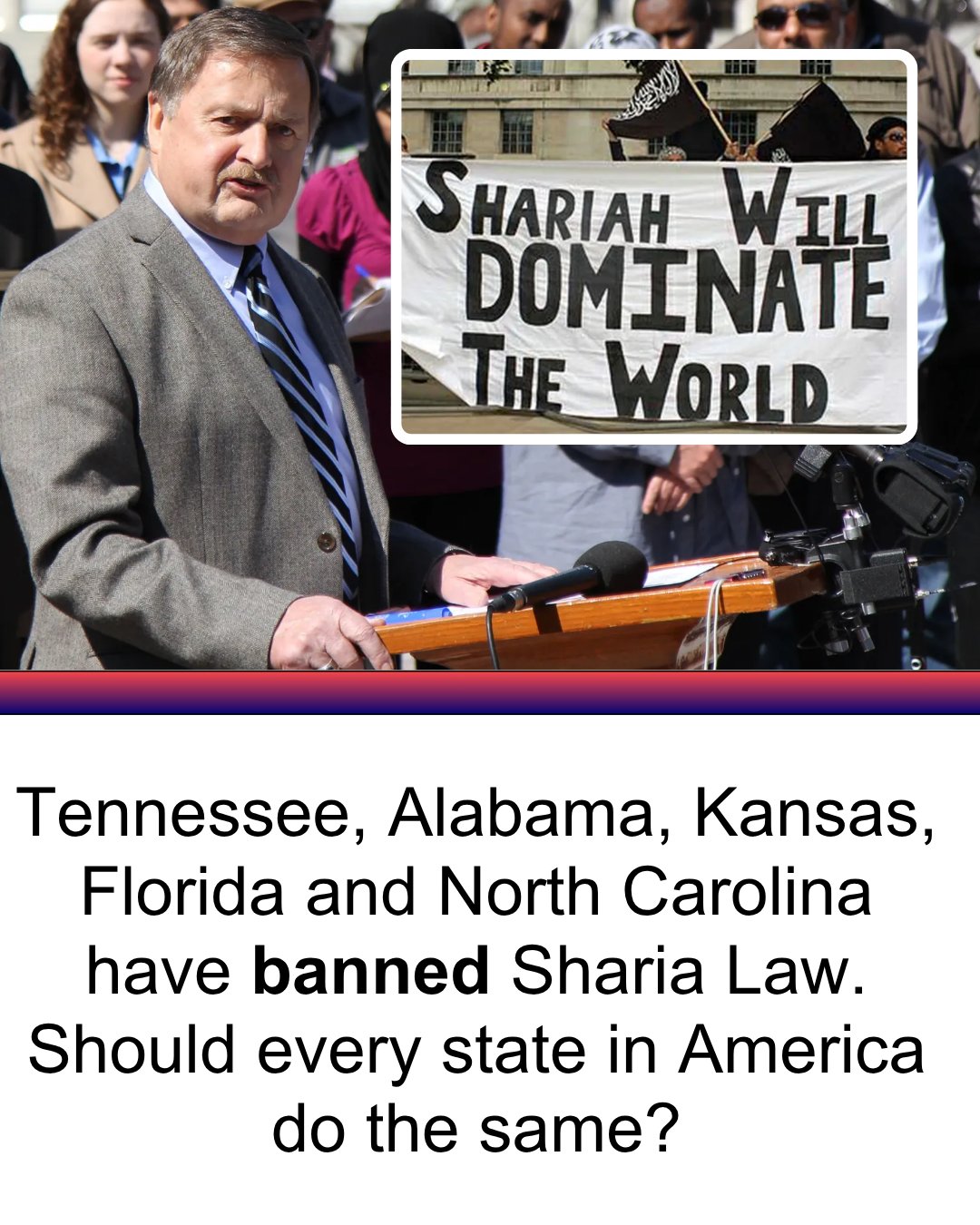
“Tennessee, Alabama, Kansas, Florida and North Carolina have banned Sharia Law. Should every state in America do the same?”
It’s a yes-or-no question, but the law behind it is not yes-or-no at all.
What they passed — and what at least 12 states total have now enacted — are versions of a model bill called “American Laws for American Courts” (ALAC).
Arizona, Kansas, Louisiana, South Dakota, Tennessee, North Carolina, and Alabama have “banned sharia”, i.e., passed foreign law bans
Kansas Governor Sam Brownback signed a bill restricting state courts from using non-U.S. laws like Islamic law
North Carolina’s law, passed in 2013, restricts judges from considering Islamic law in family law cases
In practice, the bills tell a state judge: you cannot base a ruling on a foreign law or a religious code if doing so would violate a person’s constitutional rights under the U.S. or state constitution.Continue reading…
