ADVERTISEMENT
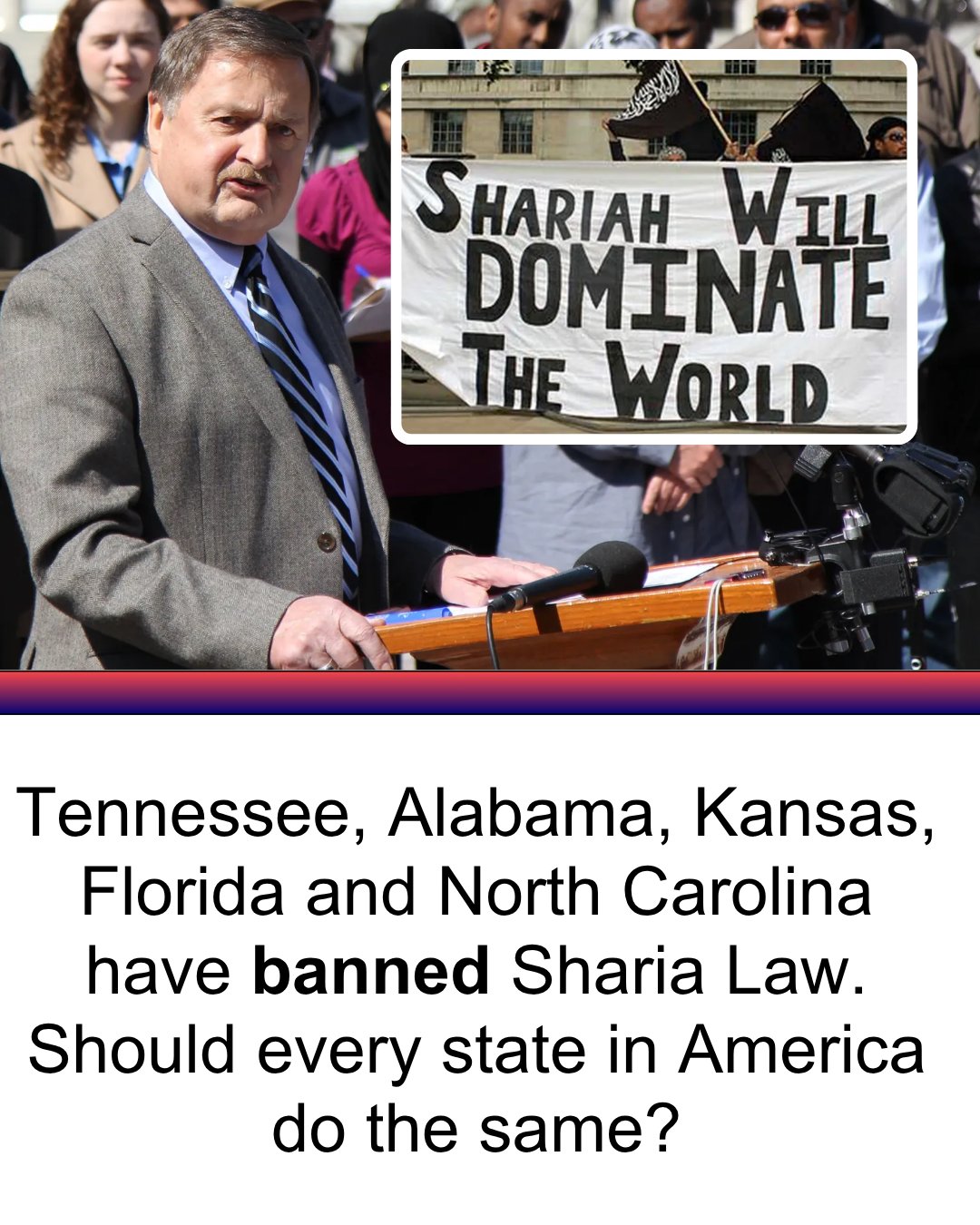
Florida and Tennessee went further in their public messaging, explicitly naming Sharia in legislative debates, which is why they appear on the meme.
Protection: American courts should never enforce punishments like stoning, amputation, or unequal inheritance that exist in some interpretations of Sharia abroad.
Preemption: Even if no judge has done it yet, pass the law now before activist judges try.
Clarity: U.S. law is supreme. A statute reminds immigrants and courts of that.
For voters who saw the “Shariah Will Dominate The World” banners in London or on TV, the bans felt like common sense.
Why courts and critics pushed back
The problem is the Constitution already does what these bills claim to do. A U.S. judge cannot enforce any foreign law that violates due process, equal protection, or the First Amendment. That has been settled since the 1800s.
They single out one religion. Oklahoma’s 2010 amendment explicitly named Sharia and was struck down by a federal appeals court as religious discrimination. Later bills avoided the word “Sharia” to survive, but the intent was clear.
They cause legal chaos. The bans risk invalidating ordinary contracts — like a Muslim couple’s prenuptial agreement (mahr), a Jewish beth din arbitration, or even a business deal that chooses British law.
They fuel fear, not safety. Between 2010-2016, at least 194 anti-Sharia bills were proposed in the U.S., with 18 enacted in 12 states. Critics argue these laws fuel Islamophobia and threaten civil liberties.
North Carolina’s version was allowed to become law without the governor’s signature precisely because lawyers warned it was “unconstitutional and infringes on religious freedom”.
So, should every state do it?
Here is where the two sides split honestly:
The case for no:
Opponents say the bans solve a problem that does not exist. No U.S. court has ever replaced the Constitution with Sharia. What the bans do accomplish, they argue, is making 3.5 million Muslim Americans feel targeted, while complicating legitimate religious arbitration that Catholics, Jews, and Muslims all use. Legal scholars note existing judicial systems already handle Islamic law disputes by treating them as contracts, not as superior law.Continue reading…
