ADVERTISEMENT
Fairness vs. Need: A Subtle Conflict
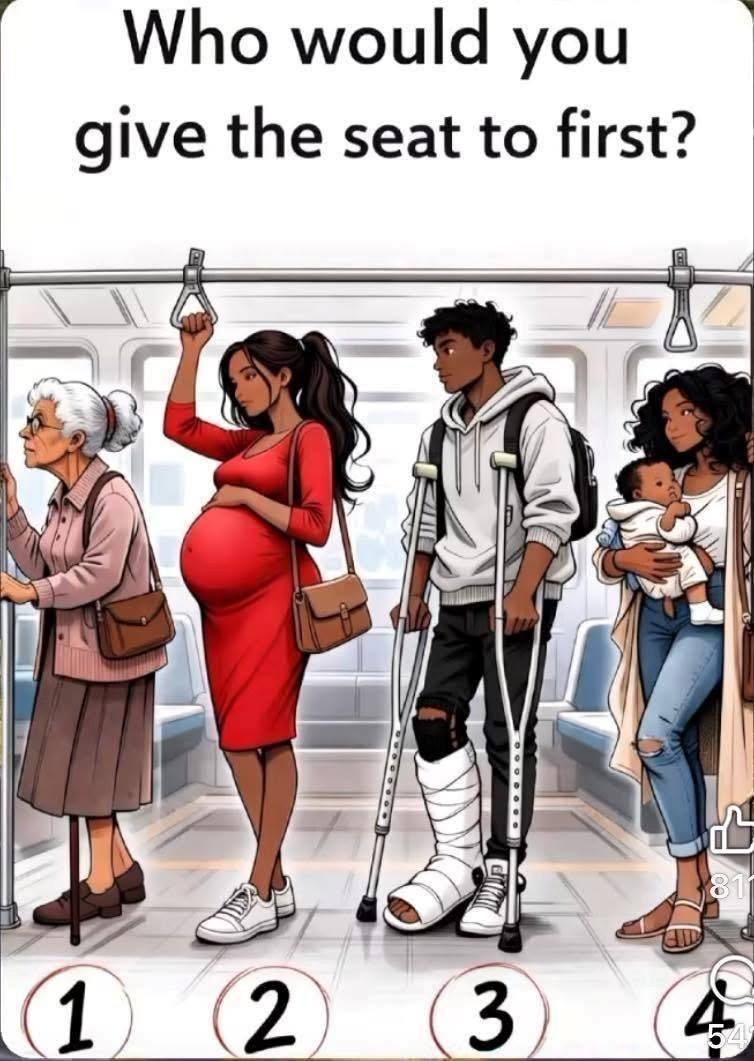
One of the most interesting tensions in the “who gets the seat first” question is the conflict between fairness and need.
Need suggests prioritization: those who are more vulnerable or in greater discomfort should be helped first.
These two principles often clash in real life.
If two elderly people enter a bus, who gets the seat?
If multiple people look tired, how do we decide priority?
If a young person with an invisible illness is standing next to a visibly elderly person, who should be prioritized?
There is no universal answer. Instead, people rely on context, judgment, and moral intuition.
This tension reflects a broader social question: Should society treat everyone equally, or should it actively compensate for vulnerability?
Social Conditioning and Cultural Values
Who we give a seat to first is not just a personal decision; it is shaped by cultural norms.
Some cultures strongly prioritize elders, seeing age as deserving respect.
Others prioritize efficiency or equality, avoiding special treatment unless absolutely necessary.
Some cultures emphasize communal awareness, where people are expected to constantly read social cues.
Others emphasize personal autonomy, where offering or refusing a seat is entirely individual choice.
These norms shape instinctive behavior. People raised in different environments may reach different conclusions in the same situation.
This makes the act of giving a seat not just ethical, but also cultural.
The Psychology of Decision-Making
When faced with multiple people needing a seat, the brain processes several factors almost instantly:
