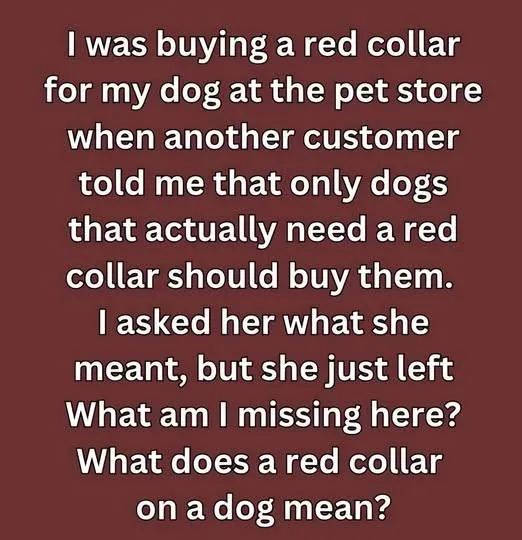
Even if you’re a dog person through and through, avoid the temptation to reach out or speak in a high-pitched voice. It might feel friendly to us, but for a nervous dog, it can be overwhelming.
Instead, give the dog a wide berth and keep your body language calm and neutral.
2. Observe Body Language
The collar is one sign, but the dog’s posture is another. A relaxed stance, wagging tail, and soft eyes often mean a dog is feeling okay. But signs of tension — stiff body, tucked tail, raised hackles, or bared teeth — mean it’s time to back away gently and avoid interaction.
3. Talk to the Owner (Respectfully)
If you’re curious or unsure, a simple, respectful question like “Is your dog okay with meeting others?” can go a long way.
You might learn that the dog is in training, has recently been adopted, or is recovering from an injury. Most dog owners will appreciate your thoughtfulness and respond honestly.
4. Manage Your Own Dog
If you’re walking your own dog and see a red-collared pup ahead, hold your leash firmly and calmly redirect your dog’s attention.
Continue reading…