While legal reforms and court rulings in recent years have reduced the use of this punishment, the legacy of these sentences continues to raise serious ethical, legal, and humanitarian concerns.
A Sentence That Allows No Second Chance
Life without parole, often referred to as LWOP, is the harshest sentence available under U.S. law short of the death penalty.
For adults, it is controversial; for children, it has become a focal point of international criticism.
Under such sentences, individuals are denied any opportunity for release, regardless of evidence of maturity, remorse, rehabilitation, or changed circumstances.
Critics argue that imposing this punishment on children ignores decades of scientific research showing that children’s brains are still developing, particularly in areas related to impulse control, risk assessment, and decision-making.
The United States stands largely alone in this practice. International human rights treaties, including the United Nations Convention on the Rights of the Child, prohibit life-without-parole sentences for minors.
Although the U.S. has signed but not ratified the convention, it remains one of the only countries in the world that has historically imposed such sentences on children.
Who Are the Children Affected?
The cases behind these statistics vary widely, but many share common patterns.
Some children were convicted of homicide committed during robberies or other violent crimes.
Others were sentenced under felony-murder laws, which allow individuals to be convicted of murder even if they did not personally kill anyone or use a weapon.
In several cases documented by advocacy organizations, children were prosecuted as adults for their alleged role in crimes committed alongside older peers.
Critics argue that this practice fails to adequately consider the power dynamics, fear, and immaturity that often influence children’s actions.
Research consistently shows that the vast majority of children sentenced to life without parole come from marginalized backgrounds.
Many grew up in environments marked by extreme poverty, unstable housing, exposure to violence, neglect, or abuse.
Structural racism has also played a significant role, with Black and Latino youth disproportionately represented among those receiving the harshest sentences.
The Case of Lionel Tate
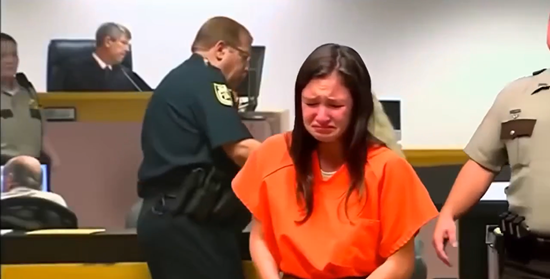
One of the most widely cited cases in discussions of juvenile life sentences is that of Lionel Tate, who was arrested in Florida at the age of 12 for the death of a 6-year-old girl during what his defense described as a simulated wrestling match.
In 2001, Tate became one of the youngest individuals in modern U.S. history to receive a life-without-parole sentence.
The ruling drew national and international outrage, with critics arguing that a child lacked the capacity to fully understand the consequences of his actions or the legal process he faced.
Although Tate’s sentence was later reviewed and modified following legal appeals and public pressure, his case became a turning point in the broader debate over whether children should ever be tried and punished as adults.
It also highlighted how quickly a single case involving a minor can expose systemic flaws in the justice system.
Supreme Court Rulings and Legal Reforms
Over the past two decades, the U.S. Supreme Court has issued several landmark decisions limiting the harshest punishments for minors.
In Roper v. Simmons (2005), the Court ruled that the death penalty for crimes committed by minors was unconstitutional.
In Graham v. Florida (2010), the Court barred life-without-parole sentences for juveniles convicted of non-homicide offenses.
In Miller v. Alabama (2012), the Court ruled that mandatory life-without-parole sentences for juveniles, even in homicide cases, were unconstitutional.
Subsequent rulings required courts to consider youth, background, and potential for rehabilitation before imposing such sentences.
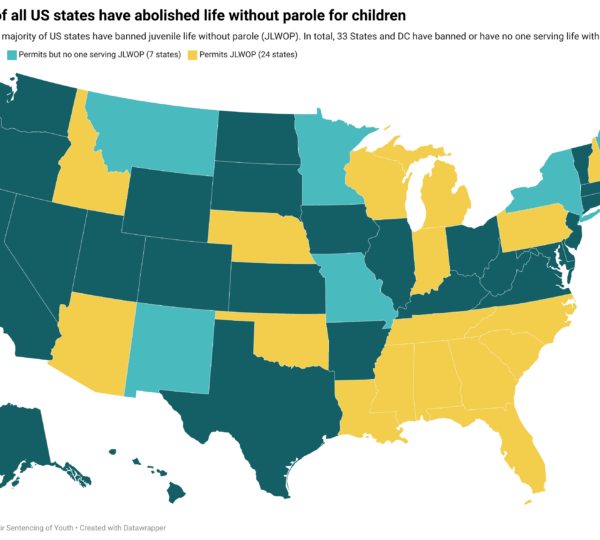
Despite these decisions, life without parole for juveniles has not been entirely abolished in the United States. Some individuals sentenced decades ago remain incarcerated under old rulings, while others have faced lengthy resentencing processes that do not guarantee release.
Moral and Psychological Concerns
Mental health experts and child development specialists overwhelmingly agree that children differ fundamentally from adults in their capacity for judgment and change.
Adolescents are more susceptible to peer pressure, more likely to act impulsively, and less capable of foreseeing long-term consequences.
Critics argue that sentencing a child to die in prison denies the possibility of redemption and contradicts the foundational principles of juvenile justice, which historically emphasized rehabilitation over punishment.
Continue reading…