I read it twice, then once more, not because I didn’t understand the words but because I did, and understanding them meant acknowledging that the last thin thread of denial had snapped.
My mother has never done anything halfway. When she takes, she takes with commentary. When she hurts you, she narrates it. And when my younger sister Chloe is involved, there is always a sense of shared adventure in the damage, as though cruelty becomes lighter when distributed between two people.
By the time I reached baggage claim, my pulse had slowed into something steady and cold. Panic would have been natural, maybe even expected, but panic is what they feed on, and I had learned that lesson long ago when I was fourteen and discovered that tears only encouraged them to explain why I was too sensitive.
In the rideshare home, I stared out at the gray Chicago skyline and let the math settle in my head. The “savings” they referenced was the half-million dollars I had built over a decade of forensic accounting contracts, the cushion that represented sleepless nights, canceled vacations, and a discipline neither of them had ever respected. My mother had been pressing for months to be added to my accounts “in case of emergency.” Chloe had joked openly about how unfair it was that I “just let money sit there.” I had smiled, nodded, and quietly rearranged everything.
Because here is the part my family never understood: I prepare for storms before the sky darkens.
When I pulled into my driveway, the first thing I noticed was the absence of my porch swing. The second was the way the curtains hung at odd angles, as though someone had searched without caring who would see. I unlocked the front door and stepped into an echo.
The living room looked staged for a showing after foreclosure. The sofa was gone. The television bracket hung empty. The bookshelves that once held first editions and framed photographs were stripped bare. Even the rug had been removed, leaving faint rectangular outlines where life used to sit.

In the kitchen, the dining table was missing. My grandmother’s china cabinet stood open and hollow. A single yellow sticky note waited on the counter in my mother’s looping script.
We’re finally choosing ourselves. Don’t call.
I set my suitcase down carefully in the middle of the emptiness and let the quiet wash over me. It felt less like loss and more like confirmation. They had done exactly what I expected them to do; they had simply underestimated who they were dealing with.
I took out my phone and dialed a number I knew by memory.
“Fraud prevention, this is Marcus,” the voice answered.
“It’s Natalie Mercer,” I replied evenly. “Activate the Sentinel clause on account cluster nine.”
There was no surprise in his tone. “Understood. The transfer attempt was flagged immediately. The receiving accounts are frozen, and the associated debit cards have been disabled. The system also logged device IDs and geolocation from the initiating hardware. Do you want escalation?”
“Yes,” I said, glancing around my stripped living room. “Full escalation. And notify the airline’s fraud liaison.”
Three weeks earlier, I had set up a secondary decoy account after overhearing Chloe ask my mother, in what she assumed was a whisper, whether my passwords might include our childhood dog’s name. I left a printed “ledger” in my desk drawer with credentials that appeared plausible. What it actually linked to was a monitored escrow account tied to one of my corporate clients. Any attempt to withdraw more than fifty dollars would not only freeze the transaction but also trigger an automated fraud report with federal banking oversight.
In short, they hadn’t stolen from me. They had attempted to divert corporate funds tied to a compliance audit.
I opened my laptop and logged into the asset tracker dashboard. Each major piece of furniture in my house, including the television and the antique cabinet, had been fitted with discreet tracking tags when I renovated last year. It wasn’t paranoia; it was professional habit.
Small blue dots blinked across the map. They weren’t at O’Hare. They were at a consignment warehouse on the south side.
Of course they were. They needed cash to fund the fantasy.
Two hours later, as I stood in the center of my empty bedroom, my phone lit up with my mother’s name. I let it ring almost to voicemail before answering.
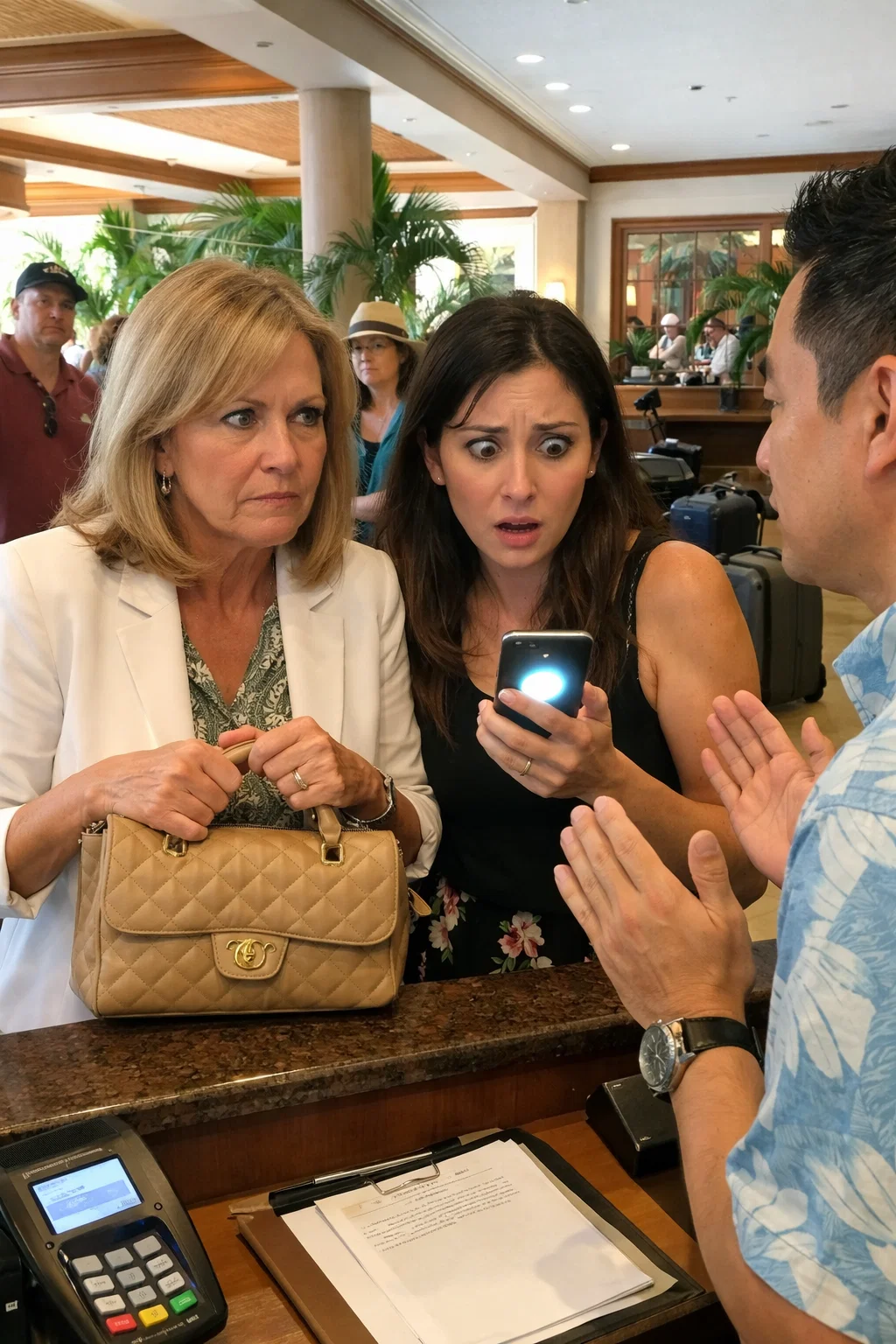
“Natalie?” she began, her voice sharp with strain. I could hear the echo of a large lobby and the muffled cadence of tropical music in the background. “There’s been a misunderstanding at the hotel.”
“I imagine there has,” I replied calmly.
“They’re saying our cards are frozen and that we’re flagged for financial misconduct. That’s ridiculous. Fix it.”
“Fix what, exactly?” I asked.
Chloe’s voice broke in behind her, panicked and high. “They won’t let us check in. They’re talking about authorities, Nat. What did you do?”
“What did I do?” I repeated softly. “I secured my accounts. What did you do?”
My mother lowered her voice, shifting into the tone she uses when attempting to regain control. “You’re being dramatic. We’re family. You would have spent that money on something boring anyway. We deserve a little joy.”
“You attempted to transfer funds from a monitored escrow account,” I said. “That account is tied to a compliance audit involving interstate transactions. The bank’s system doesn’t care that you’re my mother. It only cares that someone attempted unauthorized movement of a large sum. That triggers federal review.”
Silence. Then a sharp intake of breath.
“You told them?” she whispered.
“I didn’t need to,” I replied. “The system told them.”
There was a commotion in the background. I heard someone say, “Ma’am, we need you to remain here.” Chloe began to cry.
“Natalie, please,” my mother said, and for the first time in my life I heard fear unfiltered by performance. “Call them. Tell them it was a mistake. Tell them you authorized it.”
I walked into my kitchen and sat on the bare floor where my table used to be. “When you emptied my house and left a note telling me not to call, did you expect gratitude?” I asked quietly.
“That was just frustration talking,” she snapped, then softened instantly. “We didn’t think you’d overreact like this.”
“This isn’t overreaction,” I replied. “This is consequence.”
I ended the call.
The next morning, I met two uniformed officers at the consignment warehouse. The owner, pale and sweating, cooperated quickly once he understood he was in possession of stolen property linked to an active fraud investigation. My furniture was still there, tagged and documented. Within hours, arrangements were made for everything to be returned.
Meanwhile, the bank’s legal team contacted me to confirm that charges were being evaluated for attempted financial fraud and unlawful entry, as my home security logs showed my mother’s override code had been used during my absence.
By evening, my phone buzzed again. This time it was Chloe.
“We’re at the airport holding area,” she said, her voice hoarse. “They’re making us sign statements. Mom says you’ve ruined everything.”
I leaned against my restored sofa, now back in place though the room still smelled faintly of warehouse dust. “No,” I said gently. “I protected what I worked for.”
“She said you’d cave,” Chloe whispered. “She said you always do.”
“I used to,” I admitted. “But I don’t anymore.”
There was a long pause. “They might press charges,” she said finally.
“That depends on the investigators,” I replied. “But understand something, Chloe. This isn’t about revenge. It’s about boundaries. You crossed them deliberately.”
Weeks passed. The investigation concluded with formal charges for attempted fraud and unlawful property removal. My mother, who once bragged about knowing how to “work any system,” discovered that systems document more than they tolerate. Chloe accepted a plea arrangement requiring restitution and mandatory financial ethics counseling. My mother’s case proceeded further, her defiance prolonging what could have been resolved quietly.
In the end, restitution was ordered in full, including damages for the property disruption. A restraining order was granted without contest. The bank commended my preemptive safeguards, and one of my corporate clients extended my contract, impressed by the irony of my personal audit.
One crisp autumn evening, months after the chaos had settled, I stood in my living room, everything restored to its rightful place, sunlight spilling across the rug they once tried to sell. The house no longer felt violated. It felt clarified.
My phone buzzed with a final email from my mother, written from a monitored account as part of her legal compliance.
I never thought you’d go this far.
I considered replying, then closed the message without response.
Because this was not about how far I went. It was about how far they believed they could go without consequence.
And as I poured a glass of wine and looked around at the home I built piece by piece, I realized something steady and liberating: they had expected panic, collapse, desperation. Instead, they encountered preparation, documentation, and the quiet certainty of someone who no longer mistakes tolerance for love.
The house was not empty after all. It was intact, protected, and finally free of the illusion that family excuses everything.