ADVERTISEMENT
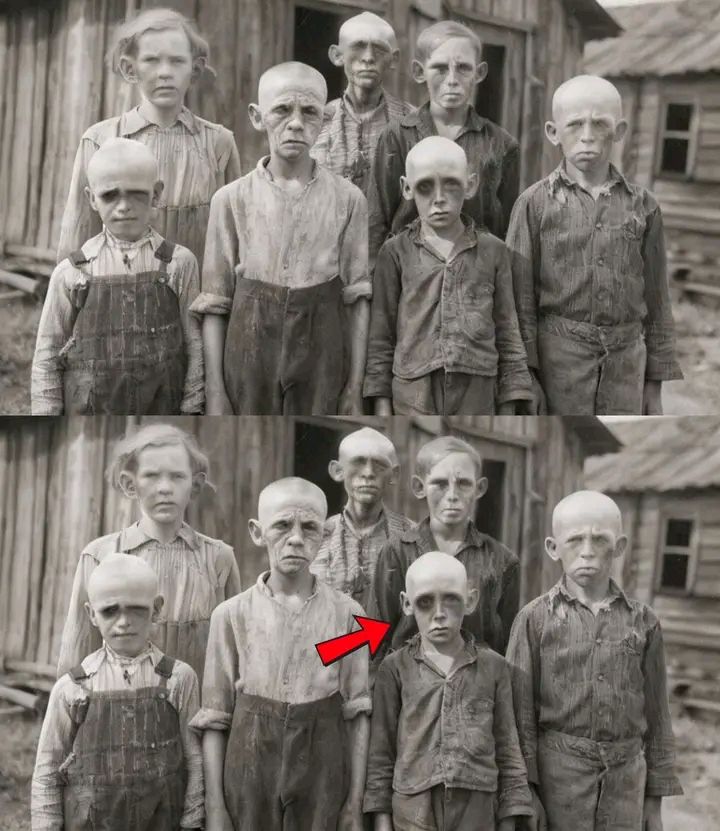
The children did not speak, cry, or behave in typical ways.
A sheriff involved in the case left his job shortly after and never spoke publicly again.
Records were sealed in 1973.
It’s dramatic. Disturbing. Cinematic.
But is it real?
Newspaper coverage
Court or welfare records
Even sealed records leave traces—references, citations, secondary mentions.
But searches through historical archives reveal no verifiable case matching this exact description.
It means this specific story is not supported by reliable evidence.
The Closest Real-World Parallels
While the Hollow Ridge story itself is unverified, there are documented cases of severely isolated or neglected children.
1. Genie
Discovered in California in 1970, Genie was a child who had been isolated for years.
Displayed unusual behaviors
Struggled with social interaction
Her case is well documented in psychology and linguistics.
2. Anna
Anna was found in extreme neglect, confined and deprived of normal development.
Her case highlighted the devastating effects of isolation on human growth.
3. Oxana Malaya
Raised among dogs, Oxana displayed animal-like behaviors when discovered.
Her story, like others, demonstrates how environment shapes behavior.
These cases are real. They are tragic. And they are well studied.
But none match the scale or supernatural tone of the Hollow Ridge narrative.
Appalachia and Isolation: The Real Context
The setting described—remote Appalachian hills—is not random.
The Appalachian region has long been associated with:
Geographic isolation
Tight-knit family structures
Limited access to institutions in certain historical periods
Scholars in Anthropology have documented how some communities remained socially and culturally separate for generations.
However, it’s important to avoid exaggeration or stereotypes.
Most Appalachian communities:
Maintained connections with nearby towns
Participated in broader society
Were not secretive enclaves cut off for centuries
The “Single Family for 200 Years” Claim
Another key element of the story is the idea of a single family living in isolation for generations without outside contact.Continue reading…
